

How to Repair an Exterior Door
- Door Replacement Toronto
- November 22, 2025
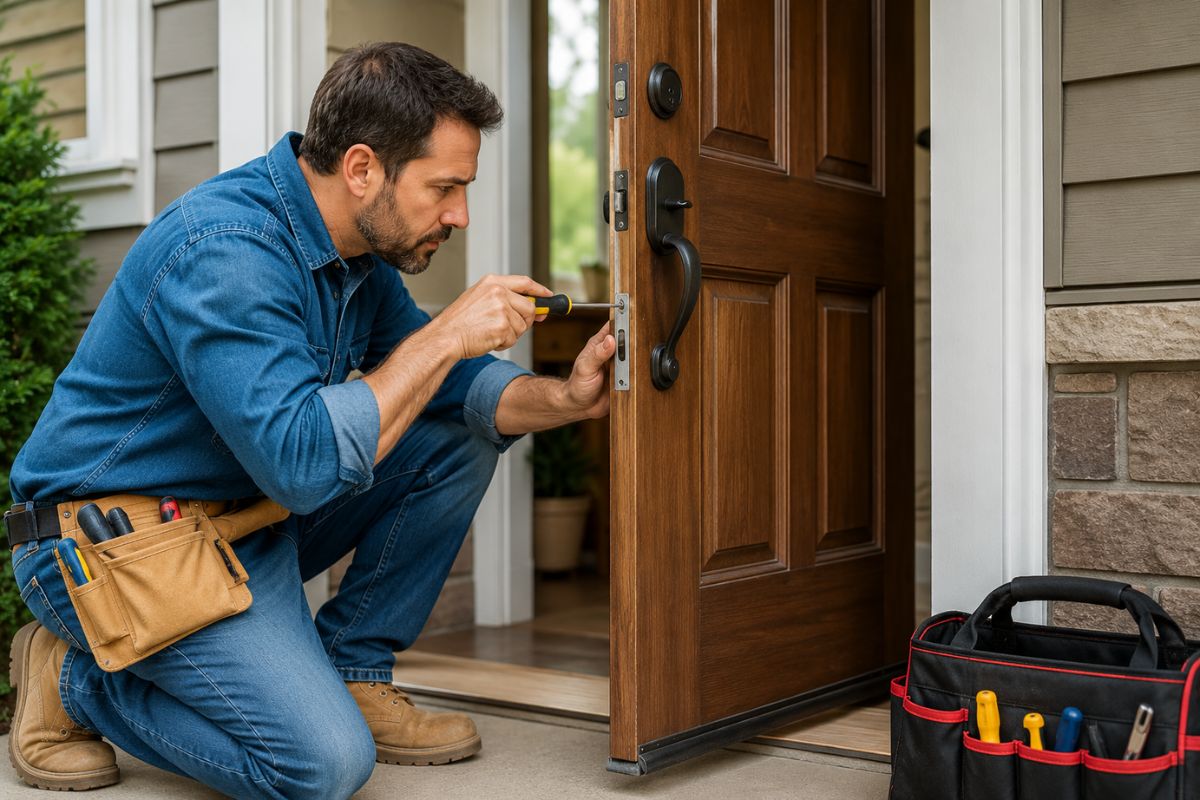
Most individuals do not put much thought into their outside door, except when it gives them problems. A door that is stuck during summer, allows cold air to enter in winter, or one that just will not latch properly is more than just an inconvenience. The team at Door Replacement Toronto deals with these issues every day, and honestly, a lot of them are more manageable than homeowners expect.
That said, not every fix is the same. Some problems you can solve on a Saturday morning with basic tools. Others need a trained eye and professional-grade materials. Either way, knowing what you’re looking at puts you in a much better position — so let’s break it down.
Common Exterior Door Problems
Diagnosis comes first. Here’s what tends to go wrong and why:
- Drafts and air leaks — Weather stripping on the door is old and needs to be replaced, or a space is developing between the door and its frame
- Sticking or dragging — Wood swells with moisture content, the hinges have become loose, or the frame has moved
- Frame rot or damage — Moisture gets in, especially around the bottom corners, and wood starts to break down — more common in older homes than people realize
- Latch or deadbolt won’t line up — The door has moved out of square, so the bolt no longer meets the strike plate cleanly
- Cracks or surface wear — Sun, impact, and just plain time take their toll on any exterior surface
Step-by-Step Repairs You Can Actually Do
1. Replacing Weatherstripping to Stop Drafts
Peel off the old weatherstripping — it usually comes away pretty easily once it’s worn. Start by thoroughly cleaning the surface prior to any other work. Next, measure your new weatherstripping, and apply the adhesive tape to the door edges. You should never overlook the bottom; the door sweep takes care of this problem area. Your heating bill will thank you.
2. Fixing a Door That Sticks
Start with the hinges. This is the most overlooked cause — loose screws let the door sag and drag. Swap any stripped screws for longer ones that reach deeper into the frame. Still sticking? Run a hand plane or coarse sandpaper along the binding edge until the door moves freely. Seal or repaint that area right away. Bare wood and moisture are a bad combination.
3. Dealing With Frame Rot
Caught it early? Wood hardener soaked into the affected area, followed by epoxy filler, does a solid job on minor rot. Shape it, sand it smooth, repaint, and you’re done. But if the rot has spread into the structural part of the frame, patching it is just delaying the inevitable. A full frame replacement is the smarter call — and cheaper in the long run than repeated fixes that don’t hold.
4. Getting the Latch to Line Up Again
Rub some lipstick or chalk on the latch bolt, then close the door to mark exactly where it’s hitting the strike plate. Small offset? A few passes with a metal file opens up the plate enough to fix it. Bigger gap? Fill the old screw holes, let them dry, then reposition the strike plate entirely and redrill. Takes maybe 20 minutes and the difference is immediate.
5. Sealing Surface Cracks
The small cracks that appear on a wooden door are easily solved. They can be filled using wood filler, which is suitable for use outdoors. Once cured, it should be sanded down to smoothness and then painted or stained. This should not only make the door look good but also prevent water damage.
When It's Time to Call Door Replacement Toronto
Some jobs are genuinely beyond what a DIY approach can handle well. Severe frame damage, a door that’s badly out of square, or repairs that keep failing — these are signs that something more fundamental needs attention. Pushing through without the right experience usually leads to a bigger bill later.
Door Replacement Toronto handles everything from weatherproofing and hardware fixes to complete door and frame replacements across the Greater Toronto Area. The team shows up with the right tools and materials, and they get it right the first time — no second-guessing, no patchwork fixes that come undone in six months.
If you have reached this stage, then please contact them through phone no. 416-800-1596 or visit them at 51 Wolseley St #302, Toronto, ON M5T 1A4. Some times the most effective method of fixing an issue is just knowing when to turn to experts.
